2026 How to Choose the Best Server Hosting for Your Business Needs?
Choosing the right server hosting is crucial for your business. It impacts performance, security, and scalability. In 2026, the market is more competitive than ever. Understanding your unique needs is essential. You must consider bandwidth, storage, and customer support. These factors influence your decision significantly.
Server hosting options vary widely. From shared hosting to dedicated servers, each has its pros and cons. Shared hosting is cost-effective but may lack reliability. Dedicated servers offer more control but at a higher price. Balancing budget and performance is a common challenge.
It's important to stay updated on the latest trends. New technologies can enhance your server hosting options. However, these changes might be overwhelming. Ensure you evaluate providers based on reviews and trustworthiness. The right choice makes your business thrive. Make informed decisions to avoid potential pitfalls.
Understanding the Different Types of Server Hosting Services Available
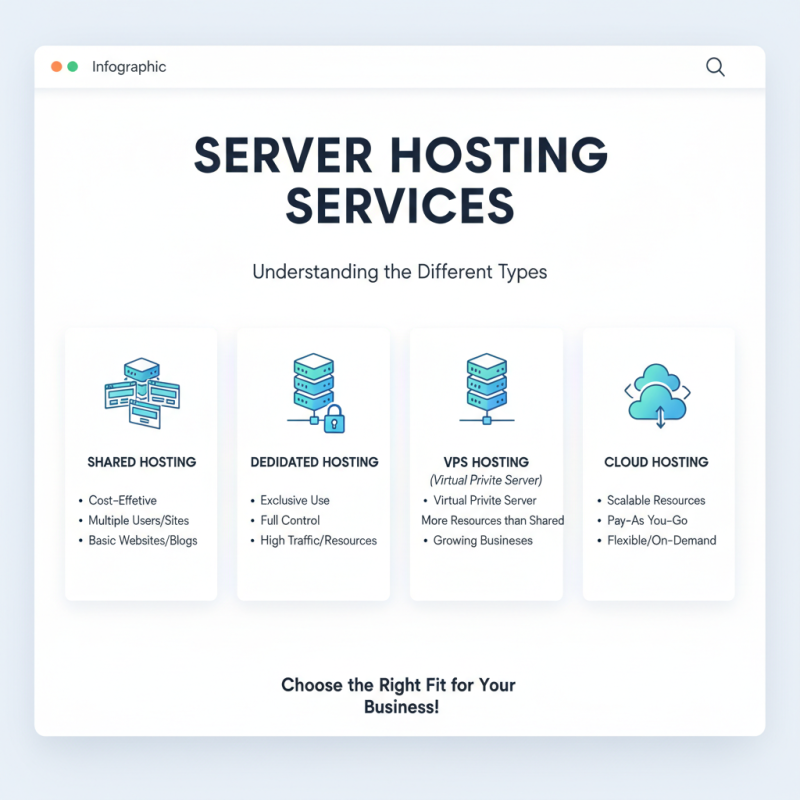
Choosing the right server hosting is crucial for any business. Understanding the types of server hosting services can help. There are several options available: shared, dedicated, VPS, and cloud hosting. Each type caters to different needs.
Shared hosting is cost-effective. Multiple businesses share resources. It can be limiting. Performance issues may arise if one site consumes too much bandwidth. Dedicated hosting provides an entire server. It offers better performance and security. However, it comes with a higher cost and requires more management expertise.
VPS hosting combines elements of both shared and dedicated hosting. It gives you more control and resources. Finally, cloud hosting is popular for its scalability. You pay for what you use. It's flexible, but can lead to unpredictable costs. Each hosting type has its pros and cons. Reflect on your specific business needs before making a decision.
Assessing Your Business Needs and Growth Potential for Hosting Solutions
Choosing the right server hosting involves assessing your business needs and growth potential. Understand your current operations first. Will you run simple applications or complex operations? Analyze your website traffic. According to Statista, global data traffic is expected to reach 175 zettabytes by 2025. This increase can impact your server's performance dramatically.
Next, project your growth. The right hosting solution should scale with your business. A recent report from Gartner predicts that by 2024, 75% of organizations will have moved to a multi-cloud environment. This approach allows flexibility and adaptability. Align your hosting choices with this trend. Consider whether your team has technical expertise. If they lack it, managed hosting may be a wiser option.
Don't overlook security needs. Cyber threats are rising. A report by Cybersecurity Ventures states that global cybercrime damages will reach $10.5 trillion annually by 2025. This reality demands robust security features in hosting solutions. Reflect on potential risks and ensure your choice includes appropriate safeguards. Balancing cost and performance is key, yet challenging. Examine both current and future needs. Sometimes, cheaper options may hinder growth.
Evaluating Performance Metrics and Reliability of Hosting Providers
When selecting a server hosting provider, evaluating performance metrics is crucial. Speed is a primary factor that influences user experience. A reliable host should offer high uptime percentages. Often, a percentage below 99.9% signals potential issues. Latency, too, plays a significant role. Lower latency means faster data retrieval. This can enhance website performance and overall customer satisfaction. Keeping track of these metrics can reveal a provider's efficiency.
Reliability encompasses more than uptime. Regular backups are essential for data safety. A robust disaster recovery plan ensures business continuity. Review the support options available. 24/7 customer service may seem standard, but not all providers deliver. Communication channels, such as chat and phone support, matter. Inadequate support can lead to prolonged downtimes. Researching customer reviews can offer insights into a host's reliability.
Consider the flexibility of hosting solutions. The right provider should accommodate growth. This means scalable options in server resources. However, some providers may upsell unnecessary features that complicate decisions. It's important to reflect on your specific needs. Avoid choosing solely based on flashy marketing materials. Clarity about your requirements results in better selection.
Comparing Cost Structures and Features of Various Hosting Plans
Choosing the right server hosting for your business is crucial. Cost structures vary widely among different plans. Some services offer monthly payments, while others require annual commitments. Carefully examining these options can save you money in the long run.
Features embedded in hosting plans often determine their value. Look for bandwidth, storage space, and speed guarantees. Some plans include additional features like security packages or backup options. These extras can enhance reliability. However, not every feature may be necessary for you. Assess what fits your business model best.
Reflection is essential in this decision-making process. You may discover that the cheapest option does not fulfill your needs. Equally, a premium plan might offer too many features. Take stock of your requirements and budget before making a decision. Hosting is not a one-size-fits-all solution; tailored options will yield better results.
Examining Customer Support and Service Level Agreements in Hosting Options
When selecting the best server hosting for your business, customer support is crucial. Many companies overlook this aspect, focusing solely on features or pricing. However, reliable customer support can make a difference during critical times. Look for providers that offer 24/7 support. A quick response can prevent significant losses.
Service Level Agreements (SLAs) are equally important. An SLA outlines the expected uptime and support response times. Analyze these agreements carefully. They should align with your business requirements. A vague SLA might lead to unexpected downtime. Trustworthy providers will offer clear terms and penalties for service failures.
In the fast-paced digital world, you can’t afford to be left in the dark. Engaging with a hosting provider that understands your needs is vital. Review customer feedback to gauge their support responsiveness. Keep in mind, not every provider will suit your business. Evaluating these factors can ensure your server hosting choice supports your growth.