Why Choose Cloud Hosting for Your Business Needs?
In today's digital landscape, businesses face numerous challenges. Cloud hosting emerges as a vital solution. It provides flexibility and scalability for various business needs. Many companies are turning to this technology to improve their operations.
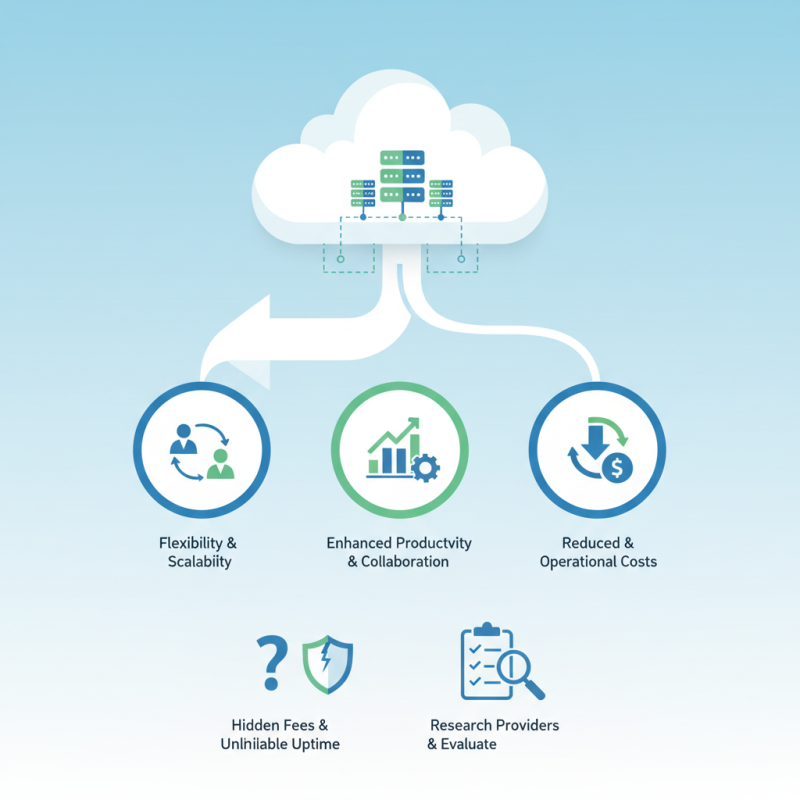
Cloud hosting allows you to access resources remotely. This means better collaboration among teams, leading to enhanced productivity. Additionally, it can reduce operational costs by eliminating the need for physical servers. However, not all cloud hosting providers offer the same level of service. Some may have hidden fees or unreliable uptime, which can harm your business.
While cloud hosting presents many advantages, it’s essential to choose wisely. Research potential providers and understand their offerings. Weigh the pros and cons carefully to find a solution that fits your specific needs. Embracing cloud hosting without proper evaluation could lead to missed opportunities.
Benefits of Cloud Hosting for Business Growth and Scalability
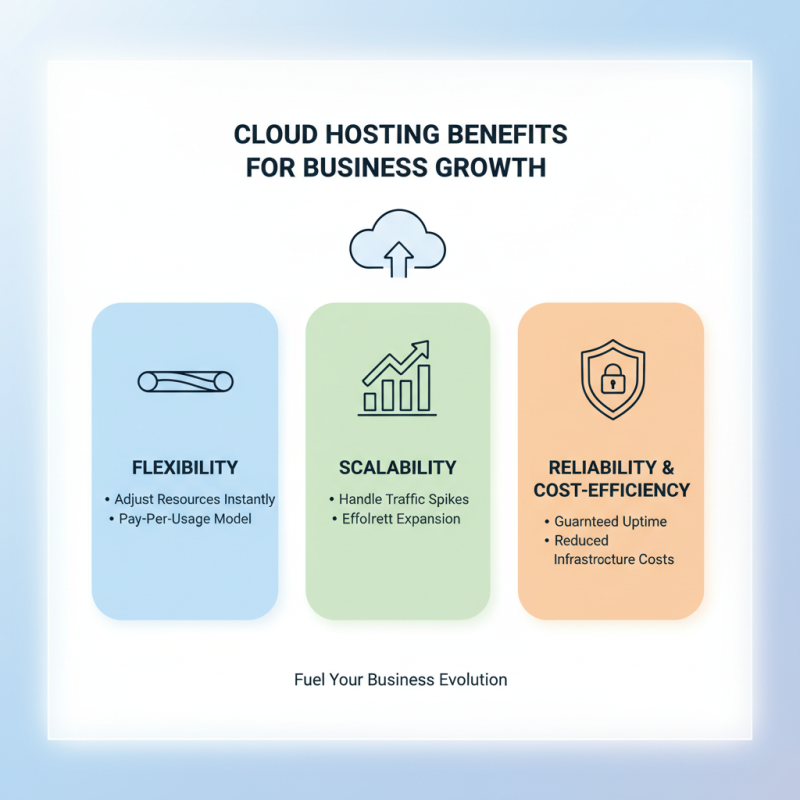
Cloud hosting offers remarkable benefits for businesses aiming for growth and scalability. One major advantage is flexibility. Companies can adjust their resources based on demand, ensuring they only pay for what they use. This is especially beneficial during peak times. A sudden increase in traffic? Cloud hosting can accommodate that spike effortlessly.
Another point to consider is the integration of various tools. Many cloud solutions provide excellent collaboration features. Remote teams can easily access files and applications in real-time. However, businesses must ensure their teams are trained to use these tools effectively. Otherwise, the advantages may go unrealized.
Security also plays a crucial role. With rising cyber threats, businesses must prioritize data protection. Many cloud providers offer advanced security measures, like encryption. Still, relying solely on these measures without proactive internal policies can lead to vulnerabilities. This continuous need for vigilance underscores the importance of a well-rounded approach to cloud security.
Cost Efficiency of Cloud Hosting Compared to Traditional Solutions
Cloud hosting has revolutionized the way businesses manage their IT resources. One of the most compelling advantages is its cost efficiency. According to a recent report by the International Data Corporation, companies can save up to 30% on IT costs when switching to cloud solutions. This is primarily due to reduced hardware expenses and lower maintenance costs associated with cloud environments.
Traditional hosting often requires hefty upfront investments in servers and infrastructure. In contrast, cloud hosting operates on a pay-as-you-go model. This flexibility allows businesses to only pay for the resources they use. A survey by Gartner indicated that 64% of businesses experienced lower operational costs after migrating to cloud services. However, not all companies maximize these savings. Some end up over-provisioning resources, leading to higher-than-expected bills.
Additionally, cloud hosting minimizes downtime, further translating to cost savings. A report by Forbes highlighted that businesses lose an average of $5,600 per minute during outages. However, transitioning to cloud hosting also requires strategic planning. Companies must continuously monitor usage and adjust their resources accordingly. This ongoing management is often overlooked, potentially negating some of the financial benefits.
Why Choose Cloud Hosting for Your Business Needs? - Cost Efficiency of Cloud Hosting Compared to Traditional Solutions
| Dimension |
Cloud Hosting |
Traditional Hosting |
| Initial Setup Cost |
Low ($100 - $500) |
High ($1,000 - $10,000) |
| Monthly Operating Cost |
Moderate ($20 - $500) |
High ($100 - $1,000) |
| Scalability |
On-Demand |
Limited |
| Maintenance |
Provider Managed |
User Managed |
| Disaster Recovery |
Included |
Additional Cost |
| Flexibility |
High |
Low |
Security Advantages of Cloud Hosting: Industry Standards and Practices
Cloud hosting has gained popularity for its
security advantages. Businesses can feel more secure
knowing their data is backed by advanced technologies. With cloud solutions, data is often encrypted during
transfer and storage. This ensures that even if unauthorized access occurs, the data remains protected.
Moreover, many cloud providers implement rigorous compliance
protocols. They adhere to industry standards that help protect sensitive information. Regular audits and security
assessments are common practices that enhance protective measures. However, not all providers are created equal.
Some may lack transparency in their security practices, which is a concern for businesses. It's crucial to choose a
provider with a proven track record in security.
In addition to encryption and compliance, cloud hosting offers scalability in security features.
Businesses can tailor security measures to their specific needs. This flexibility is essential as threats evolve.
Yet, relying solely on cloud providers without internal security practices may leave gaps. Regularly revisiting
security configurations and staying informed on threats can significantly enhance overall security posture.
Balancing reliance on cloud services and maintaining robust internal controls
is key for effective security management.
Impact of Cloud Hosting on Business Continuity and Disaster Recovery
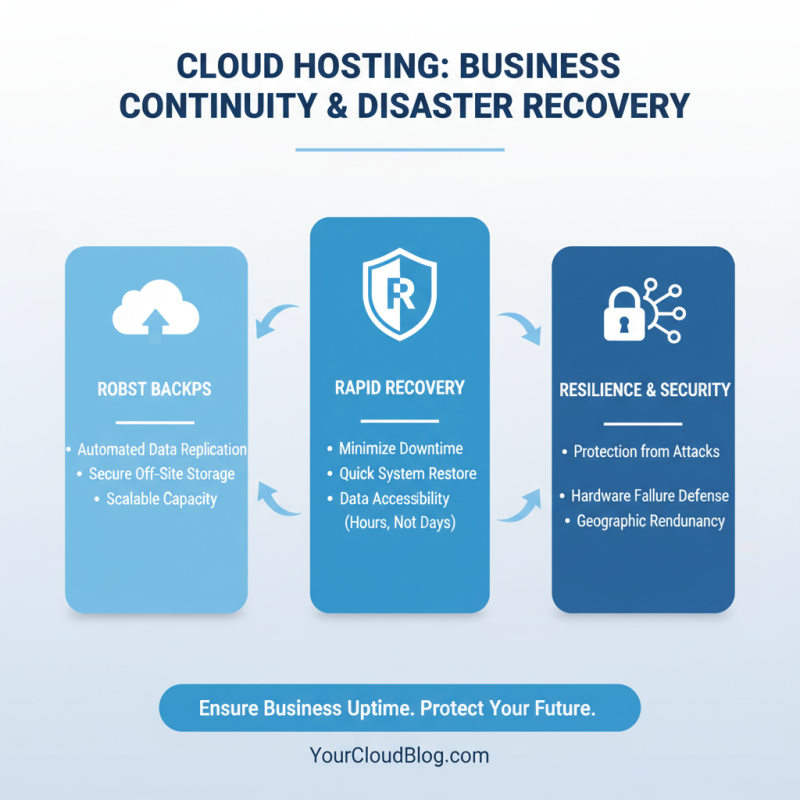
Cloud hosting offers significant benefits for business continuity and disaster recovery. By utilizing a cloud infrastructure, businesses gain access to robust backup solutions. This means that in the event of data loss, such as hardware failure or cyber-attacks, recovery can be swift and efficient. For instance, a company can restore its operations within hours rather than days.
The flexibility of cloud hosting allows businesses to scale resources as needed. This is crucial during unexpected events, like rapid growth or an emergency. However, not every organization is prepared for this shift. Some may struggle with the transition, facing challenges in training staff and adapting workflows. It is important to consider these factors when implementing cloud solutions.
Moreover, relying solely on cloud hosting can present risks. Issues like downtime or vendor dependency may arise. Businesses should not overlook the importance of having a backup plan that includes on-site data solutions. Reviewing these elements can lead to better decision-making and improved resilience.
Emerging Trends in Cloud Hosting: Adoption Rates and Future Projections
Cloud hosting is rapidly transforming the business landscape. Recent studies indicate that the global cloud hosting market is projected to grow at a CAGR of over 22% from 2023 to 2030. Adoption rates are surging, as businesses recognize the flexibility and scalability that cloud solutions offer. Many companies have shifted more than 70% of their infrastructure to cloud services in recent years. This trend highlights the urgency for businesses to adapt.
However, challenges remain as organizations transition to the cloud. Security concerns and data privacy continue to be significant hurdles. Organizations must rethink their strategies to ensure they are not just compliant but also secure. A survey found that nearly 64% of IT leaders worry about data breaches in cloud environments. This reflects a larger need for robust security protocols.
As we look toward the future, the emphasis on hybrid cloud approaches is increasing. Predictions suggest that by 2025, approximately 85% of enterprises will adopt a hybrid cloud strategy. This model allows companies to maintain control over sensitive data while leveraging the cloud for flexibility. The path isn’t without bumps, though. Many enterprises struggle to integrate on-premises and cloud systems seamlessly. This creates an ongoing need for training and adjustments.