Why Is an Exhaust Pressure Gauge Important?

Why Is an Exhaust Pressure Gauge Important?

Why Is an Exhaust Pressure Gauge Important? The question becomes practical when an engine loses power, smokes heavily, or runs hotter than usual. An Exhaust Pressure Gauge measures pressure inside the exhaust system before the turbocharger, diesel particulate filter, or catalytic converter. That reading reveals restriction that engine sounds cannot always expose.

Engine builder David Vizard is widely respected for practical airflow analysis. His guidance is often expressed this way: “Do not confuse exhaust velocity with backpressure.” The distinction matters. High gas speed can support strong cylinder scavenging, while excessive pressure pushes against the piston during its exhaust stroke. A gauge turns that hidden resistance into measurable evidence.

Picture a diesel truck climbing a long grade. The turbo outlet temperature rises, acceleration weakens, and the engine feels unusually heavy. A pressure reading taken from a properly installed test port can show whether the exhaust path is becoming restricted. Compare readings at idle, steady speed, and full load. Always record engine speed and load conditions.

A low reading is not automatically good. Sensor placement, leaks, soot, and inaccurate calibration can mislead the diagnosis. That is where this subject becomes less tidy. I have seen maintenance decisions based on one dramatic number, yet a single reading rarely tells the whole story. Used with temperature, boost, and smoke observations, an Exhaust Pressure Gauge supports safer, more defensible troubleshooting. It does not replace professional testing. It makes hidden problems visible.
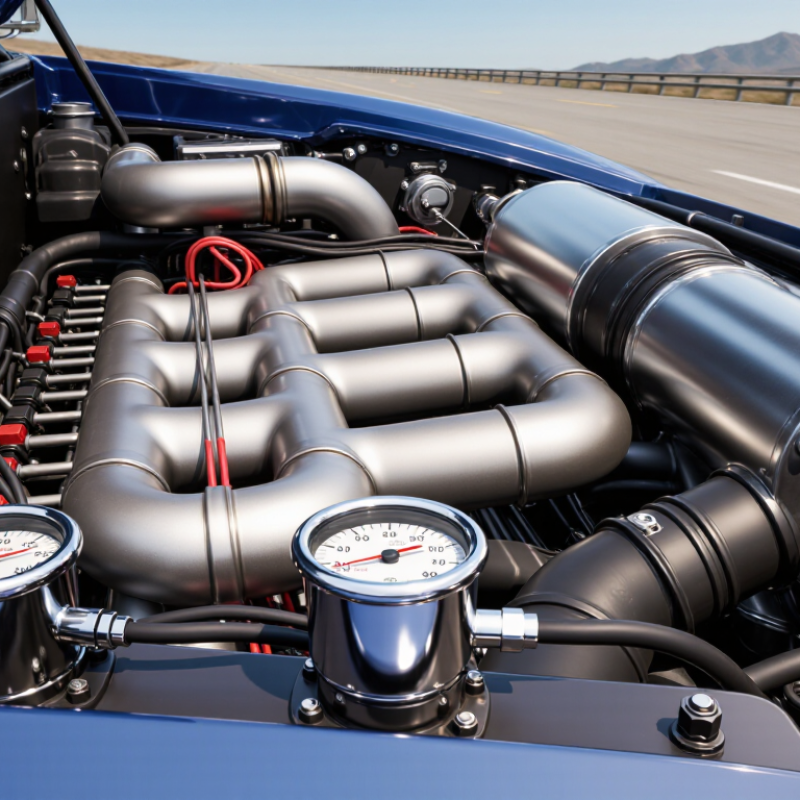
Why Is an Exhaust Pressure Gauge Important?

What an Exhaust Pressure Gauge Measures

Why Is an Exhaust Pressure Gauge Important?

An exhaust pressure gauge measures pressure inside the exhaust path. It may read manifold pressure, turbocharger outlet pressure, or backpressure before a particulate filter. Some systems measure pressure on both sides and show the difference. That difference is often more useful.

The reading changes with engine speed, load, and exhaust temperature. A light-load engine may show low pressure at idle. The value should rise smoothly during acceleration.

A sharp increase can suggest a restricted filter, damaged catalyst, blocked pipe, or a failing valve. However, pressure alone cannot identify the exact fault. It needs comparison with engine speed, temperature, and differential-pressure data.

Small details matter. A technician should confirm the gauge location, hose condition, and measurement units first. One loose sensing tube can create a convincing but false reading. That mistake is easy to miss.

The European Environment Agency reported that road transport produced 71.7% of European transport emissions in 2021. This makes accurate exhaust-system monitoring increasingly important.

Professional service data also shows why trends matter more than one reading. A gradual pressure increase across repeated inspections can reveal restriction before performance drops noticeably.

In practice, I would record pressure at idle and under a fixed load. The method is not perfect, especially when conditions change. Still, a clean record is more reliable than memory.


How Exhaust Pressure Affects Engine Performance

An exhaust pressure gauge is important because exhaust pressure directly influences engine performance. When gases cannot leave efficiently, the engine works harder to complete each combustion cycle. This extra resistance is called backpressure.

Too much backpressure increases pumping losses. The engine may feel weak during acceleration, especially under heavy load or at high engine speed. Fuel consumption can also rise because the engine needs more energy to move exhaust gases through the system. In some engines, excessive pressure raises exhaust gas temperature and stresses valves, pistons, and turbocharger components.

The measurement location matters. A gauge installed before a turbocharger shows a different pressure from one installed after it. Technicians should compare readings at consistent engine speeds, loads, and temperatures. Service specifications provide the most reliable reference. A single reading can mislead.

Small changes matter.

A partially blocked filter, crushed pipe, damaged catalyst, or failing valve may create abnormal pressure. In workshop inspections, technicians often confirm the gauge reading with temperature checks and a visual examination. This combined approach reduces guesswork. I have seen pressure readings treated as absolute proof, which is a mistake. Pressure is evidence, not the entire diagnosis. The engine’s age, maintenance condition, intake airflow, and control system can also affect performance. Recording normal readings during routine testing makes future changes easier to identify.

Key Benefits of Monitoring Exhaust Pressure

Why Is an Exhaust Pressure Gauge Important?

Key Benefits of Monitoring Exhaust Pressure

An exhaust pressure gauge shows how freely gases leave the engine. That reading can expose restriction before power loss becomes obvious. During maintenance checks, technicians compare pressure at idle and under load. A rising reading may point to a blocked filter, damaged muffler, or restricted pipe. Small changes matter.

The U.S. Environmental Protection Agency’s 2024 heavy-duty emissions rule sets particulate limits as low as 0.005 grams per brake horsepower-hour. Such tight limits depend on correctly functioning exhaust-treatment systems. Excessive backpressure can raise exhaust temperature and increase turbocharger workload. It may also trigger frequent regeneration on diesel systems. Monitoring pressure helps technicians separate a sensor fault from a real mechanical problem.

Fuel savings are possible, but they should not be promised automatically. The U.S. Department of Energy’s Vehicle Technologies Office identifies exhaust restriction as a source of pumping loss. The actual impact depends on engine size, load, age, and calibration. A gauge provides useful evidence, not a complete diagnosis. Readings should be recorded against the engine maker’s service limits, with temperature and engine speed noted. Ignoring those details can create false conclusions. A low reading is not always good, either. Leaks before the measurement point can hide a serious fault.

Why Is an Exhaust Pressure Gauge Important? - Key Benefits of Monitoring Exhaust Pressure

Monitoring Dimension What the Gauge Measures Typical Interpretation Key Benefit Recommended Response
Exhaust backpressure Pressure in the exhaust system upstream of a restriction, measured in kPa, mbar, psi, or inH2O. A rising reading at the same engine speed and load generally indicates increasing flow resistance. Provides an early warning of restricted exhaust flow before performance and component damage become severe. Compare the reading with the engine or equipment manufacturer's limit under the specified test conditions.
Pressure before and after a DPF The pressure difference, or differential pressure, across the diesel particulate filter. An increasing differential pressure usually reflects soot or ash accumulation, although sensor and hose faults can produce similar symptoms. Helps identify a filter that may require regeneration, cleaning, inspection, or replacement. Check the pressure hoses and sensor first, then follow the applicable maintenance procedure.
Turbocharger outlet pressure Exhaust pressure near the turbocharger outlet or turbine inlet, depending on the installation. Excessive pressure can increase pumping work and reduce the pressure ratio available to drive the turbine efficiently. Supports turbocharger protection and helps diagnose restricted exhaust components. Investigate the DPF, catalytic converter, muffler, piping, and exhaust temperature data together.
Engine load versus pressure The relationship between exhaust pressure, engine speed, and operating load. Pressure normally changes with operating conditions; a meaningful diagnosis requires comparing readings at equivalent speed and load. Reduces false alarms caused by comparing readings from different operating states. Record pressure together with engine speed, load, exhaust temperature, and ambient conditions.
Fuel consumption and power Indirect evidence of pumping losses caused by exhaust restriction. A restriction can increase the work required to expel exhaust gases, potentially reducing efficiency and available power. Connects pressure readings with operating cost and machine performance. Trend pressure and fuel-use data over time rather than relying on a single reading.
Exhaust gas temperature Pressure is evaluated alongside temperature measured before or after the restriction. High pressure combined with abnormal temperature may indicate a blocked component, regeneration issue, or fueling problem. Improves fault isolation and helps protect exhaust after-treatment components. Use pressure and temperature trends together with diagnostic fault codes and inspection results.
Leak detection Unexpectedly low, unstable, or inconsistent pressure at a known test point. Possible causes include cracked piping, loose connections, damaged gaskets, or leaking pressure-sensing lines. Helps locate faults that may affect emissions control, turbocharger operation, or sensor accuracy. Inspect joints, clamps, gaskets, tubing, and sensor connections for soot traces or physical damage.
Measurement-unit conversion Common pressure units used in service manuals and test equipment. 1 kPa equals 10 mbar, approximately 0.145 psi, and approximately 4.02 inH2O. Prevents unit-related errors when comparing gauge readings with technical specifications. Use one consistent unit and verify the gauge scale before recording results.
Preventive-maintenance trend Change in pressure readings over repeated inspections at comparable operating conditions. A gradual upward trend can reveal progressive restriction before a warning lamp or noticeable power loss occurs. Supports condition-based maintenance and can reduce unexpected downtime. Maintain a dated log of pressure, engine speed, load, temperature, and maintenance actions.

Note: Acceptable exhaust-pressure values vary by engine design, exhaust configuration, operating speed, load, and after-treatment system. Always use the applicable manufacturer's service specification for pass/fail decisions.

Warning Signs of Excessive Exhaust Pressure

Why Is an Exhaust Pressure Gauge Important?

Warning Signs of Excessive Exhaust Pressure

Excessive exhaust pressure often develops quietly. The engine may feel normal at idle, yet struggle under load. During workshop checks, technicians often notice sluggish acceleration, rising coolant temperature, black smoke, or unusually high exhaust temperature. A pressure gauge makes this hidden restriction visible before damage becomes expensive.

SAE technical literature commonly treats about 20–21 kPa, or 3 psi, as a serious backpressure warning point for many turbocharged diesel applications. However, the correct limit depends on engine design and manufacturer specifications. A gauge reading that climbs sharply during acceleration deserves attention. So does a needle that remains high after the throttle is released.

Watch the pattern.

A blocked filter, crushed pipe, failing turbocharger, or restricted muffler can create excessive pressure. The U.S. Department of Energy’s maintenance guidance links restricted exhaust flow with reduced engine efficiency and higher thermal stress. Field measurements also show that pressure should be checked near rated load, not only during idle testing. That detail is easy to miss.

A practical inspection begins with a cold engine and a calibrated gauge. Record pressure at idle, steady speed, and heavy load. Compare each result with the service data for that engine. One imperfect reading is not a diagnosis. Still, repeated high readings should not be ignored, especially when the exhaust manifold glows, fuel use increases, or acceleration becomes uneven.

Choosing and Using the Right Exhaust Pressure Gauge

Why Is an Exhaust Pressure Gauge Important?

Choosing and Using the Right Exhaust Pressure Gauge

An exhaust pressure gauge reveals restriction before performance drops. It can expose a clogged filter, damaged muffler, or failing turbocharger. The International Council on Clean Transportation reported that heavy-duty vehicles create approximately one-quarter of global road-transport carbon dioxide emissions. Small maintenance errors therefore have wider consequences. A suitable gauge should match the engine’s expected pressure range, not simply offer the highest number. For many diesel applications, a 0–60 psi range provides useful resolution, while high-pressure systems may require a wider scale. Confirm the manufacturer’s service limit before installation.

Placement matters. Install the sensing line at the specified point, often before the turbocharger or particulate filter. Use heat-resistant tubing and a pressure snubber where exhaust pulses make the needle shake. A gauge with clear markings, reliable fittings, and accuracy near the working range is more useful than an impressive maximum reading. SAE test procedures stress controlled measurement conditions, yet real workshops are rarely perfect. A loose connection can imitate low pressure. A blocked line can imitate a severe restriction.

Tips: Compare readings at idle and under load. Record engine speed, temperature, and filter condition. Inspect the sensing tube regularly. Do not diagnose from one reading alone. The U.S. Environmental Protection Agency’s emissions guidance supports consistent inspection records, but field judgment still matters. A clean gauge face cannot correct a poorly chosen measurement point.