Top 5 Cloud Hosting Plans for Your Business Needs in 2026?
Choosing the right cloud hosting plans is crucial for businesses in 2026. The cloud industry is rapidly evolving, offering diverse options tailored to various needs. In a world where digital presence is vital, selecting an efficient hosting plan becomes essential.
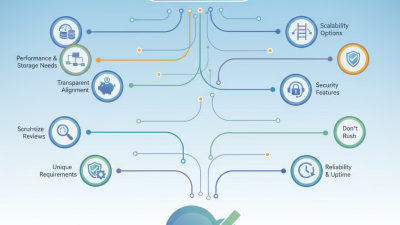
Each business has unique requirements. Some prioritize speed and performance, while others need better scalability. With so many cloud hosting plans available, it can feel overwhelming. Companies must evaluate their specific needs. A robust plan can improve operational efficiency and drive growth.
However, not all cloud hosting options deliver the expected results. Businesses often face challenges in aligning their needs with available plans. There are pitfalls in overlooking storage capacity or support services. It's important to reflect on past decisions and learn from them as we approach 2026.
Top Considerations for Choosing a Cloud Hosting Plan in 2026
When selecting a cloud hosting plan in 2026, several factors are paramount. Security should be a top priority. With data breaches on the rise, 43% of businesses reported a significant security issue last year. Look for providers that offer robust encryption and compliance with industry regulations.
Performance is another critical consideration. A recent report indicated that 70% of users abandon slow websites. Opting for a plan that guarantees minimal downtime and quick loading speeds is crucial. Evaluate the service level agreements (SLAs) of potential providers. Not all SLAs are equal. Some may promise 99.9% uptime, while others may fall short due to hidden caveats.
Finally, scalability is essential for growing businesses. Many companies face challenges as user demand fluctuates. A flexible plan allows you to adjust resources according to your needs. This adaptability can be lifesaving. Keep an eye on potential costs as well. Sometimes the cheapest option can lead to higher expenses in the long run. Always assess the trade-offs.
Comparative Analysis of Leading Cloud Hosting Providers
In 2026, choosing the right cloud hosting plan is crucial for businesses. Many providers offer varied options, each with unique features. While some emphasize speed, others focus on scalability. Users often struggle to determine which one best suits their needs. A thorough comparative analysis reveals significant differences.
Speed is a vital factor. Some services promise instant loading times but often fall short. This inconsistency can frustrate users. Scalability is another important aspect. Companies may begin small, but growth can happen quickly. A few plans offer seamless scaling, while others make it difficult. Comparing these elements is essential for making informed decisions.
Security cannot be overlooked. Each provider has a different approach to data protection. Some may have cutting-edge protocols, but there are loopholes. It’s important to dig deeper. Customer support also plays a role in the overall experience. When issues arise, response times vary dramatically. This can leave businesses vulnerable during critical times. Evaluating these factors allows for better choices in cloud hosting.
Top 5 Cloud Hosting Plans for Your Business Needs in 2026
| Provider |
Plan Name |
Monthly Cost |
Storage |
RAM |
Uptime Guarantee |
Support |
| Provider A |
Basic Plan |
$19.99 |
100 GB |
4 GB |
99.9% |
24/7 Support |
| Provider B |
Standard Plan |
$29.99 |
250 GB |
8 GB |
99.95% |
Phone & Chat Support |
| Provider C |
Premium Plan |
$49.99 |
500 GB |
16 GB |
99.99% |
24/7 Premium Support |
| Provider D |
Enterprise Plan |
$89.99 |
1 TB |
32 GB |
99.995% |
Dedicated Support |
| Provider E |
Starter Plan |
$14.99 |
50 GB |
2 GB |
99.8% |
Email Support |
Key Features and Benefits of the Top 5 Cloud Hosting Plans
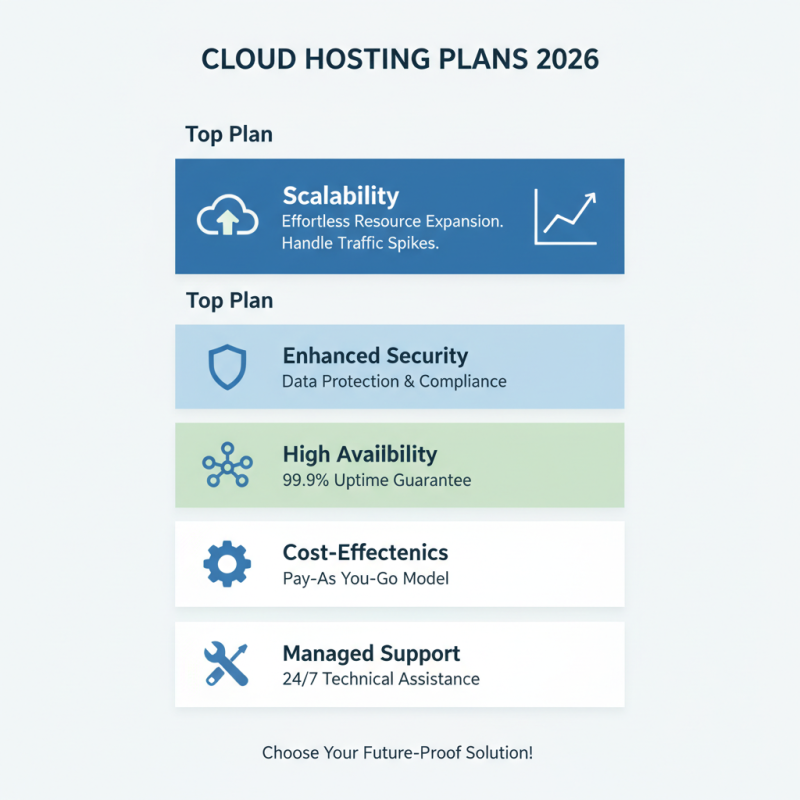
Choosing the right cloud hosting plan in 2026 involves understanding key features and benefits. Scalability is crucial for growing businesses. With the right plan, you can easily expand your resources. This capability allows you to handle increased traffic without a hitch.
Another essential feature is security. Robust security measures protect your data from breaches. Regular backups and encryption tools help safeguard sensitive information. Moreover, user-friendly dashboards simplify management. Navigating your hosting plan should not be complex or frustrating.
Additionally, performance matters. High uptime rates ensure your website remains accessible. Fast loading times enhance the user experience. However, some users may overlook these factors. They might prioritize cost over quality. This can lead to future troubles. Understanding these features helps in making informed decisions, ultimately benefiting your business.
Customer Reviews and Real-World Performance of Cloud Solutions
In 2026, customer reviews are essential for assessing cloud hosting solutions. A recent survey revealed that 74% of users prioritized performance over cost when selecting services. Many businesses need reliable uptime and speed. Yet, performance can vary widely across providers.
User feedback often highlights specific inconsistencies. For instance, one review noted that while upload speeds were impressive, download speeds lagged behind expectations. This is a common theme among many users. Over 50% reported experiencing downtime at least once a month. These issues reflect the importance of thorough testing and validation before making a choice.
Furthermore, real-world performance metrics can differ greatly from advertised capabilities. A study indicated that 30% of businesses abandon cloud services after poor experiences. Continuous monitoring and customer feedback loops play a crucial role. Providers must address these concerns to retain clients and improve satisfaction.
Cost-Effectiveness and Scalability of Cloud Hosting Options in 2026
In 2026, businesses face a rapidly changing technological landscape. Cloud hosting is crucial for adapting to these shifts. Many companies are evaluating options based on cost-effectiveness and scalability. According to a recent industry report, 70% of organizations prefer cloud hosting for its flexible pricing models.
Cost-effectiveness is paramount. Many providers offer pay-as-you-go plans. This pricing model suits businesses with fluctuating demands. A study found that companies using cloud services reduced their IT costs by an average of 30%. Yet, not all cloud services are created equal. Low-cost plans may lack essential features. Businesses must assess their specific needs.
Scalability is another critical factor. As a business grows, its hosting requirements change. A flexible cloud plan allows for easy upgrades. Experts suggest that 60% of businesses prioritize scalability when selecting a cloud provider. However, rapid scaling can lead to performance issues if not managed correctly. Balancing growth with reliable service remains a challenge for many organizations.