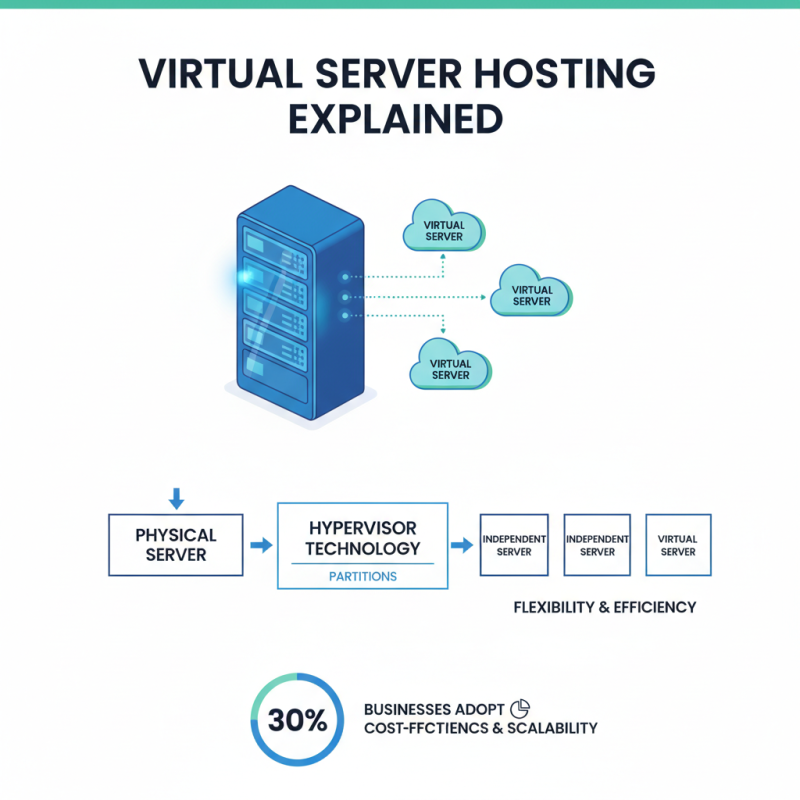
What is Virtual Server Hosting and How Does It Work?
Virtual server hosting has gained significant traction in recent years. According to a report by MarketsandMarkets, the market is expected to grow from $5.89 billion in 2020 to $15.63 billion by 2025. This growth reflects the increasing demand for cost-effective, scalable solutions in the cloud computing domain. Industry expert Sarah Thompson emphasizes, "Virtual server hosting empowers businesses to optimize resources without upfront costs."
This approach allows organizations to run multiple virtual machines on a single physical server. It enhances efficiency and reduces hardware expenses. With virtual server hosting, companies can quickly adapt to changing workloads, ensuring they remain competitive. However, challenges persist. Security concerns and potential downtimes can affect business operations.
Yet, the benefits are considerable. Users report more flexibility and better resource management. While there are still unanswered questions, many businesses are embracing this innovative solution. As the industry evolves, staying informed on best practices is crucial for maximizing advantages in virtual server hosting.

What is Virtual Server Hosting?
Virtual server hosting is a technology that allows multiple users to share a single physical server while maintaining independent virtual environments. Each virtual server operates on its own operating system and resources. This flexibility makes it an attractive option for businesses of all sizes. According to a report by Gartner, the global market for virtual server hosting is expected to grow significantly, reaching over $65 billion by 2026.
One of the main advantages of virtual server hosting is cost efficiency. Businesses can save money on physical hardware and maintenance. A study indicated that companies using virtual servers reduce operational costs by up to 60%. However, it’s important to note that not all workloads fit well within this model. Some applications may require dedicated resources for optimal performance. This can lead to issues such as slower response times or resource contention.
Security is another critical consideration in virtual server environments. While isolation of virtual machines can enhance security, sharing the same physical server can increase vulnerability risks. Cybersecurity breaches can occur through hypervisor weaknesses. A report from Cybersecurity Ventures states that attacks on virtual environments are on the rise, highlighting the need for robust security measures. Regular updates and monitoring are essential to protect these environments adequately.
Key Features of Virtual Server Hosting
Virtual server hosting has gained popularity due to its flexibility and cost-effectiveness. One key feature is resource allocation. This technology uses virtualization to divide a physical server into multiple virtual servers. Each virtual server can run its own operating system, independent from others. According to a recent report, companies see a 30% reduction in IT costs by adopting virtual server solutions. This approach optimizes resource usage, leading to better performance.
Scalability is another significant feature. Businesses can easily adjust their resources as needed. If demand increases, they can scale up quickly without downtime. Conversely, scaling down is just as easy during less busy periods. A survey noted that 72% of businesses value this scalability in their hosting solutions. However, this ease of scaling can lead to over-provisioning. Careful monitoring is necessary to avoid unnecessary costs.
Security in virtual server hosting must also be addressed. Each virtual server operates in isolation, which adds a layer of protection. Yet, vulnerabilities can still exist. According to industry experts, nearly 20% of companies experience data breaches related to virtualization. Organizations must implement strong security measures to protect their data effectively. Despite its advantages, ongoing challenges in security create a need for continual assessment and improvement.
How Virtual Server Hosting Operates
Virtual server hosting utilizes technology to partition a physical server into multiple virtual servers. Each virtual server operates independently, as if it were a dedicated server. This method provides flexibility and efficiency. According to industry reports, approximately 30% of businesses have adopted virtual server hosting due to its cost-effectiveness and scalability.
The operation of virtual server hosting hinges on virtualization technology. A hypervisor manages the allocation of resources. It divides CPU, RAM, and disk space among virtual servers. This allows for optimized performance without the need for additional hardware. Statistics show that virtual servers can reduce data center costs by nearly 40%. However, businesses may face challenges like security vulnerabilities if proper configurations are not applied.
Tip: Regular updates and monitoring can significantly reduce security risks in virtual environments.
Managing virtual servers requires a good understanding of various metrics. Administrators need to track resource usage actively. Over-provisioning can lead to poor performance, while under-provisioning may cause downtime. Striking the right balance is critical for smooth operations.
Tip: Consider using automated tools to simplify resource management.
Understanding the specifics of virtualization techniques is essential. As organizations scale, the importance of efficient resource use only grows. Observing performance metrics regularly can yield insights into necessary adjustments. This is an ongoing process and requires constant evaluation.
Benefits of Using Virtual Server Hosting
Virtual server hosting offers a range of benefits that make it an attractive choice for many businesses. It allows multiple users to share the same physical server while operating independently. According to a report by MarketsandMarkets, the global virtual server market is anticipated to grow to $7.7 billion by 2025. This growth signals a rising interest in the efficiency and flexibility that virtual servers can provide.
One significant advantage of virtual server hosting is cost-effectiveness. Businesses can reduce physical hardware costs by using virtual machines. They only pay for the resources they need. A study by Gartner indicates that shifting to virtual environments can lower IT expenses by up to 30%. This saving allows companies, especially startups, to allocate funds to other essential areas.
However, it's essential to consider some challenges. Virtual servers can sometimes lead to performance issues if not managed effectively. Overloading a single physical server with multiple virtual machines can cause slowdowns or even crashes. Additionally, security is a concern as the shared environment can be vulnerable to attacks. While virtual servers offer scalability, businesses must regularly assess their needs and configurations to maintain optimal performance and security.
Comparison with Physical Server Hosting
Virtual server hosting and physical server hosting serve distinct purposes. Virtual servers provide flexibility. They allow multiple users to operate on one physical machine, maximizing resource usage. This can lead to cost savings. A report by Gartner noted that 67% of organizations prefer virtual hosting for its scalability and efficiency.
Physical server hosting offers dedicated resources. It is often perceived as more secure. Users have full control over their hardware. However, it comes with higher costs and lacks the agility of virtual solutions. According to a recent survey, 55% of businesses feel limited by physical hosting due to its inflexibility.
While physical servers ensure complete control, they can lead to underutilization. Many businesses fail to optimize resource allocation. This situation demands reflection. The choice between virtual and physical hosting depends on specific needs. Each option has its own advantages and drawbacks. Balancing cost, flexibility, and control is essential for any business.
Comparison of Virtual Server Hosting and Physical Server Hosting